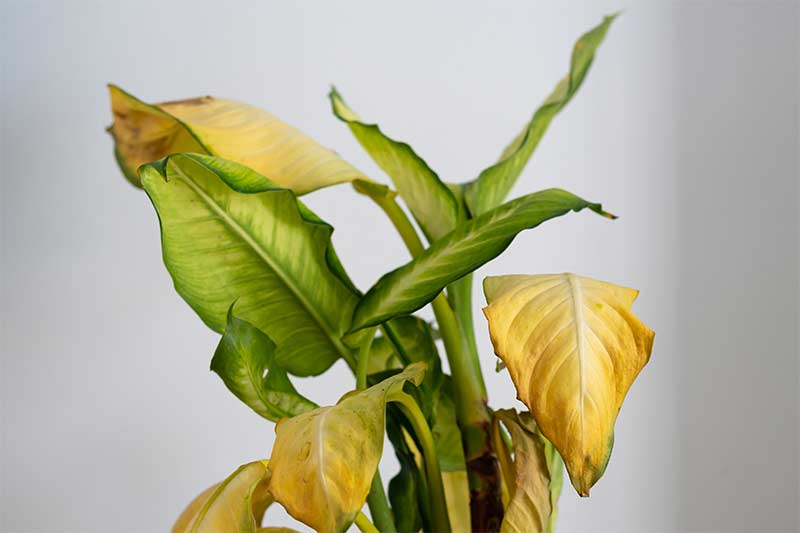
Hydroponic plants turning yellow is one of the most common — and most confusing — problems growers run into. Unlike soil growing, where you can often blame ‘bad dirt’ and move on, hydro systems give you fewer places for a problem to hide.
Here’s a systematic way to work through it.
Start With the Pattern, Not the Panic
Where the yellowing shows up on the plant tells you almost everything.
Yellowing on older, lower leaves first usually points to a nitrogen deficiency. Nitrogen is mobile in the plant, meaning it moves from older leaves to support new growth when supply runs short. This is the single most common cause of yellowing in beginner hydro setups.
Yellowing on new growth at the top of the plant usually means an iron or micronutrient deficiency. Iron isn’t mobile, so the plant can’t relocate it — new leaves simply can’t get what they need, even if older leaves look fine.
Yellowing between the veins, with veins staying green is a classic sign of magnesium deficiency, especially common in leafy greens and tomatoes.
Uniform, pale yellowing across the whole plant often points to a pH problem rather than a nutrient problem at all — the nutrients may be present in the reservoir but locked out because the pH is outside the range your plants can absorb them in.
Check pH First — It’s the Fastest Thing to Rule Out
Most hydroponic nutrients are only absorbable within a pH range of roughly 5.5–6.5. Outside that window, nutrients can be sitting right in your reservoir and still be inaccessible to the roots — a problem growers call “nutrient lockout.”
Test your reservoir pH with a digital pH meter (far more reliable than test strips for hydro). If it’s drifted outside 5.5–6.5, adjust gradually with a pH up/down solution and retest after an hour — don’t dump in a large correction all at once, as swinging pH too fast stresses roots.
Check EC/PPM Next
If pH checks out, measure your nutrient concentration (EC or PPM). Too low, and plants are genuinely starved. Too high, and roots can struggle to take up water, which paradoxically also shows up as yellowing and wilting. Compare your reading against the target range for your specific plant and growth stage — seedlings need much less concentrated nutrients than fruiting plants.
Check Root Health
Pull up net pots and look at the roots. Healthy hydro roots are white or cream-colored. Brown, slimy, or foul-smelling roots point to root rot, usually from low dissolved oxygen or reservoir temperatures above 75°F (24°C). Root rot prevents nutrient uptake entirely, regardless of what’s in your reservoir — so yellowing here is a symptom of a root problem, not a nutrient one.
A Simple Diagnostic Order
When you see yellowing, work through it in this order:
- Note where on the plant the yellowing appears
- Test and correct pH
- Test and correct EC/PPM
- Inspect roots for rot or damage
- If everything above checks out, consider a targeted micronutrient supplement (especially iron or magnesium)
Most cases resolve at step 2 or 3.
Frequently Asked Questions
Can yellow leaves turn green again?
No — a leaf that’s already yellowed generally stays that way, since the chlorophyll breakdown is permanent for that leaf. The goal isn’t to “fix” that leaf, it’s to correct the underlying issue so new growth comes in healthy.
Should I remove yellow leaves?
Yes, once a leaf is more than half yellow, it’s no longer contributing much photosynthesis and is worth removing to redirect the plant’s energy.
How often should I check reservoir pH and EC?
Daily for a new system while you’re learning its behavior; every 2–3 days once you’ve got a stable routine. Getting your lighting dialed in also reduces a lot of downstream nutrient stress, since well-lit plants use nutrients more efficiently.
Is tap water safe for hydroponics?
Usually, but chlorine and chloramine can affect root health over time. Letting tap water sit uncovered for 24 hours helps dissipate chlorine (chloramine needs a dechlorinator). Testing your tap water’s baseline pH and hardness before use will save you troubleshooting time later.