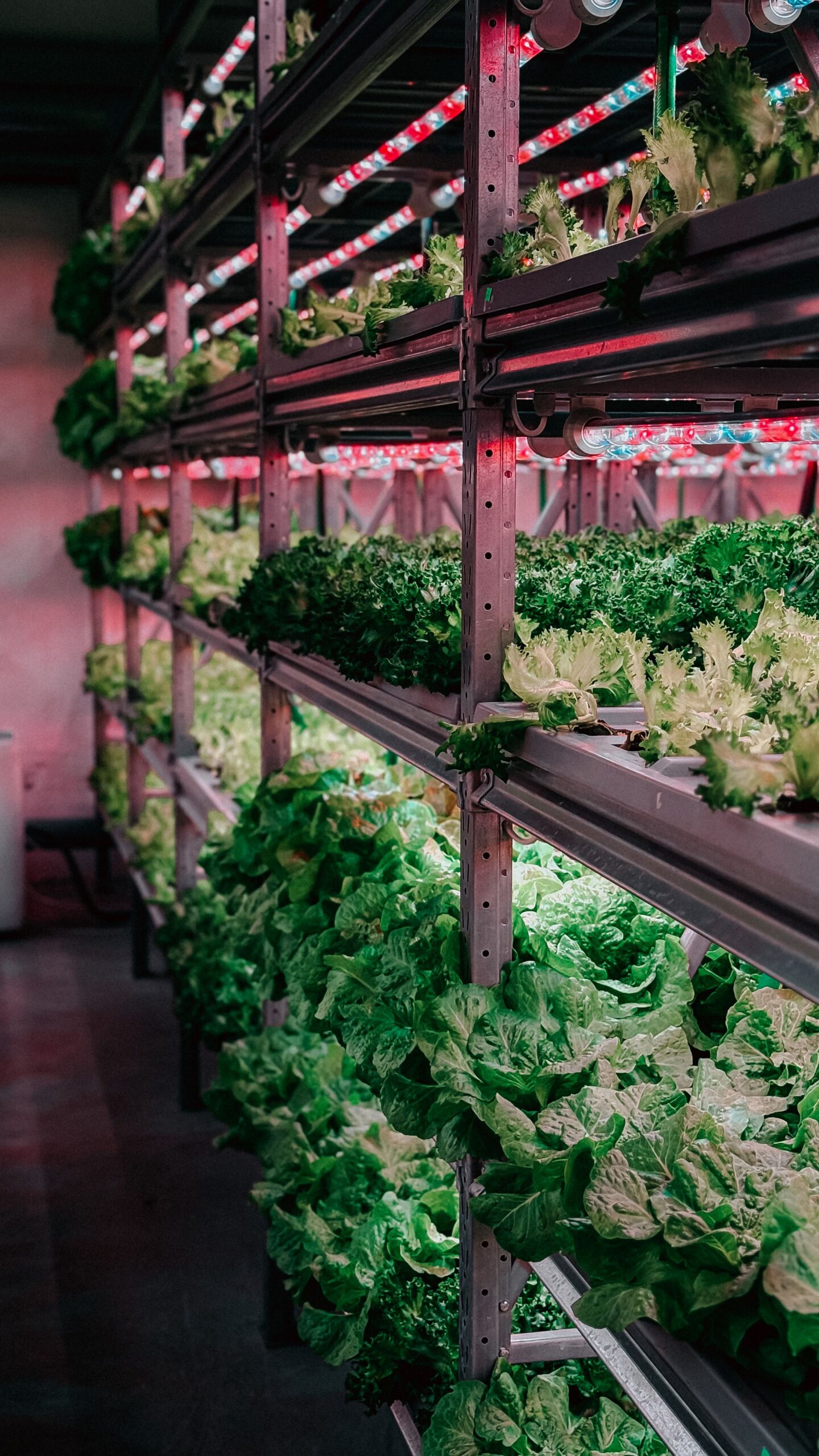
If you’ve just set up your first hydroponic system, choosing the right led grow lights hydroponic growers actually need is easier said than done. There’s a good chance you’re underestimating how much your lighting matters
Disclosure Notice
This post contains affiliate links. As an Amazon Associate, we earn from qualifying purchases at no extra cost to you
The good news: for small indoor setups (think a single grow tent, a shelf unit, or a countertop system), you don’t need a warehouse-grade lighting rig. You need the right light, sized correctly for your space, at a price that makes sense for a home grower.
Here’s what to look for, and where to spend your money.
What Actually Matters When Choosing Led Grow Lights Hydroponic Setups Need
Before comparing products, it helps to understand the two numbers that actually predict how well a light will grow plants — everything else is mostly marketing.
PPFD (Photosynthetic Photon Flux Density) measures how much usable light is actually reaching your plants’ leaves, not just how much the bulb produces. This is the number that matters most, and it’s often buried in the fine print or missing entirely from cheaper lights.
Our Pick
Best Budget
If your setup involves plants at different heights or awkward angles — a windowsill shelf, a mixed cluster of pots LED Grow Light, 6000K Full Spectrum Clip Lamp this dual-head clip light solves a problem the fixed-mount options on this list don’t. Each gooseneck arm bends independently, so you can aim two heads exactly where they’re needed rather than lighting one general area. It runs at 6000K full spectrum with a mix of red and white LEDs, and includes a timer with 4, 8, or 12-hour settings on a 24-hour cycle, so once it’s set, you don’t have to think about it again. At roughly 10W of actual power draw, it’s inexpensive to run — Amazon estimates around $2/month in electricity at 12 hours a day of use — and it clips onto almost any surface with a sturdy iron gooseneck and clamp. A solid pick if flexibility matters more to you than raw output..
Best for Hydroponic Setups Specifically
Best for Hydroponic Setups Specifically — TATU 1000W LED Grow Light
If you want a light built with hydroponic growing specifically in mind rather than general houseplants, the TATU 1000W LED Grow Light is worth a look. It’s designed with dual heads and adjustable height and angle, so you can position coverage exactly where your setup needs it — useful if you’re running a multi-plant hydroponic tray rather than a single pot. It also includes a built-in 3/9/12-hour timer, which takes the guesswork out of maintaining a consistent light schedule, something that matters more in hydroponics than in soil growing since your plants have no buffer from inconsistent care. At 4.4 stars across 644 reviews and priced around $29, it’s a reasonable step up from a basic clip lamp without jumping into commercial-grade pricing.
Coverage area tells you how much space a light can effectively cover at your plants’ typical height. Manufacturers often list a generous “max coverage” number that assumes ideal conditions — for real growing, look for coverage 20-30% smaller than what’s advertised.
A few other things worth knowing before you shop:
- Full spectrum vs. targeted spectrum: Full spectrum (mimicking natural sunlight) is the safer, more forgiving choice for beginners growing a mix of plants. Targeted spectrum lights (heavy in specific red/blue wavelengths) can be more efficient but require more knowledge to use well.
- Wattage isn’t the whole story: A 100W LED can outperform a 150W light of lower quality. Don’t shop by wattage alone — look at actual light output (PPFD) and efficiency (PPF per watt, if listed).
- Heat output: LEDs run much cooler than older HPS or fluorescent grow lights, which matters a lot in a small tent or enclosed space where heat has nowhere to go.
Grow Lights by Budget
Budget Pick (Under $50)
For growers just testing the waters with a small herb garden or a single-shelf countertop setup, an entry-level full-spectrum LED panel in the 20-45W range is usually enough. Look for one with a built-in timer and at least a basic PPFD spec listed by the manufacturer — if a product page has zero lighting data, that’s often a sign of a low-quality light dressed up in generic marketing photos.
Best for: Herbs, leafy greens, microgreens, single small tents (2×2 ft or smaller)
Mid-Range Pick ($60–$120)
This is the sweet spot for most home hydroponic growers running a proper tent (3×3 ft or similar). At this price point, look for quantum board or full-spectrum LED panels in the 100-150W range, ideally with dimming controls and a stated PPFD map showing light distribution across the canopy, not just at the center point.
Best for: Tomatoes, peppers, leafy greens at scale, small fruiting plants, 3×3 to 4×4 ft tents
Premium Pick ($150+)
If you’re running a larger tent or want to grow more demanding fruiting plants (tomatoes, peppers, or anything flowering), a higher-wattage quantum board light with adjustable spectrum and strong PPFD ratings across the full canopy is worth the investment. These typically include better heat dissipation, longer lifespans, and more consistent light distribution edge-to-edge.
Best for: 4×4 ft+ tents, fruiting and flowering plants, growers scaling up from a first successful setup
A Quick Word From Experience
Setting up your first grow light, the temptation is to go bigger than you need “just in case.” In a small space, an oversized light usually just means more heat to manage and a higher electric bill — not better plants. Start with the smallest light that properly covers your actual footprint, and upgrade later if you expand.
Frequently Asked Questions
How many hours a day should hydroponic plants get light? Most leafy greens and herbs do well with 14-16 hours of light per day. Fruiting plants like tomatoes and peppers often need slightly less (12-14 hours) once they move into the flowering stage. A cheap outlet timer is one of the best small investments you can make — consistency matters more than the exact number.
Can I use a regular LED light bulb instead of a grow light? Technically you can, but standard household bulbs are optimized for how light looks to human eyes, not for the wavelengths plants actually use for photosynthesis. You’ll get some growth, but it’ll be slower and weaker than with a proper grow light.
How close should the light be to my plants? This depends heavily on the specific light’s intensity — a stronger light needs more distance to avoid leaf burn. As a general starting point, 12-24 inches above the canopy is reasonable for most small LED panels, adjusted based on how your plants respond (watch for pale, bleached leaves as a sign the light is too close).
Do I need different lights for different growth stages? Not necessarily. A good full-spectrum light works across seedling, vegetative, and flowering stages. Some growers use adjustable-spectrum lights to fine-tune for each stage, but for a beginner setup, one solid full-spectrum light is enough to get consistently good results.
Getting Lighting Right Is Just the Start
Good lighting solves a lot of problems before they start, but it’s not the only thing that determines how your plants turn out. If you’ve already got lights sorted and you’re still seeing issues — like leaves turning pale or yellow — the cause is usually somewhere else in your system. Check out our guide on why hydroponic plants turn yellow to walk through the most common causes and how to fix them.
Looking to diagnose an issue with your plants rather than pick new equipment? Our guide on [common hydroponic plant health problems] can help you narrow down what’s going wrong.